

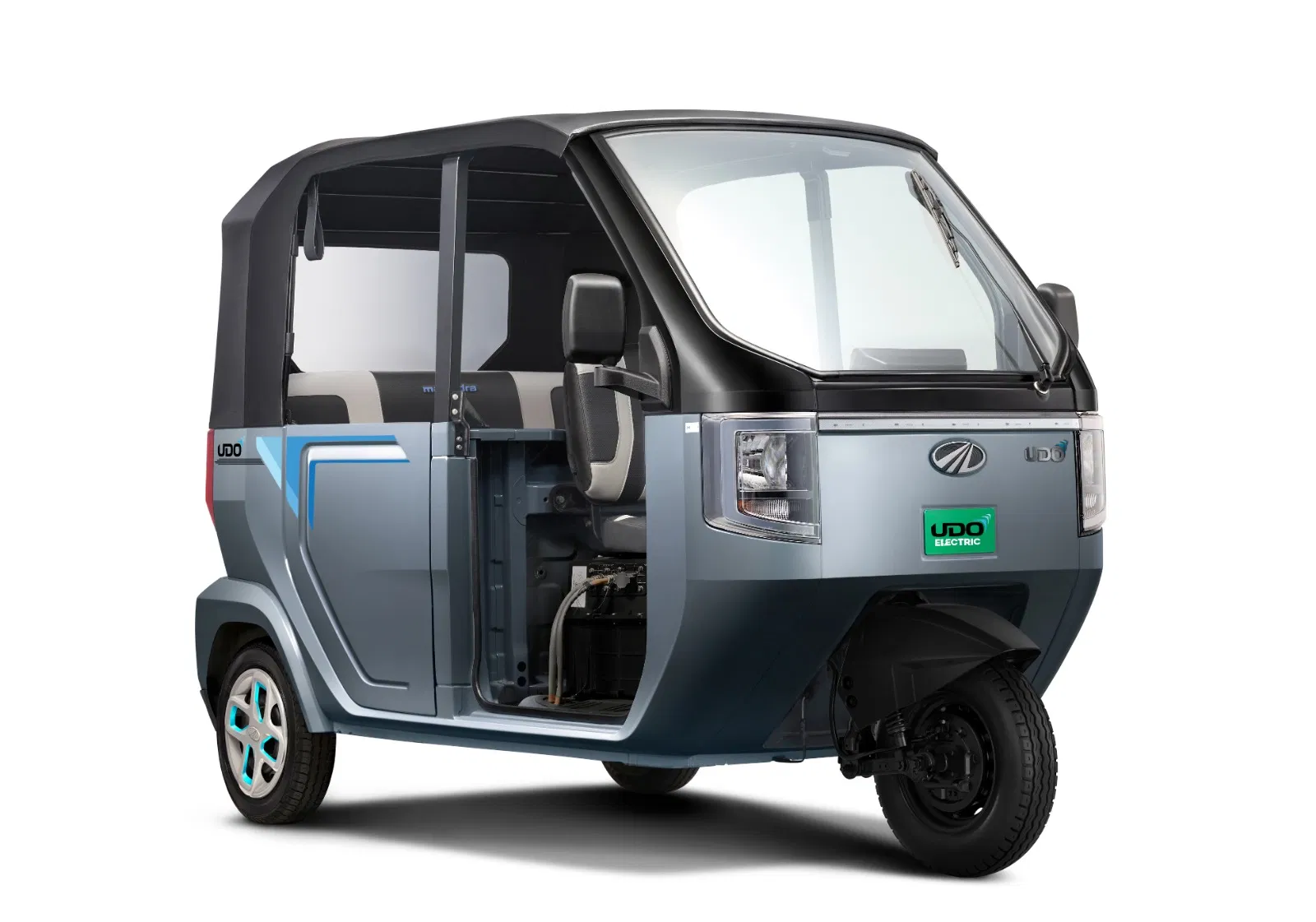
The Mahindra UDO “Autoplane” is an electric auto built on a monocoque chassis for better strength and ride comfort. It uses an 11.7 kWh battery offering up to 200 km range and produces 52 Nm torque. Priced at ₹3.58 lakh, it includes a 6-year battery warranty and driver-focused features like hill-hold assist and reverse throttle.
Urban mobility in India has long depended on auto rickshaws. They’re practical, affordable, and everywhere. But let’s be honest — comfort, refinement, and durability have never been their strongest traits.
That’s exactly where Mahindra UDO Autoplane steps in. Mahindra isn’t just launching another electric auto; they’re attempting to redefine the category altogether.
A Structural Shift: From Basic Frame to Monocoque Build
Traditional autos are built using a body mounted over a separate chassis frame. It’s functional, but over time it results in vibration, rattling, and structural fatigue.
The Mahindra UDO changes that narrative.
Instead of a conventional setup, it adopts a monocoque chassis, a construction technique widely used in modern passenger cars. This integrated body structure improves:
- Structural rigidity
- Noise reduction
- Long-term durability
- Overall ride stability
The result? A quieter and more solid driving experience — something auto commuters rarely associate with three-wheelers.
Another noticeable upgrade is the large front windshield, offering improved road visibility and better driver awareness in dense traffic.
Passenger Space Meets Driver Comfort
Space constraints are a common complaint in city autos. The Mahindra UDO addresses this with a more thoughtfully designed cabin layout that gives passengers extra legroom.
But the real transformation is for drivers.
Recognizing that drivers often spend 10–12 hours daily on the road, Mahindra has added:
- A thick, ergonomically designed “pilot seat”
- Enhanced suspension tuning
- Reduced vibration transfer to the cabin
Instead of absorbing every pothole through the spine, the ride feels smoother and more controlled — a meaningful difference for full-time operators.
Powering a Full Workday: 11.7 kWh Battery & 200KM Range
For commercial EV drivers, range equals income. Downtime equals loss.
The Mahindra UDO is equipped with an 11.7 kWh lithium-ion battery, delivering a claimed real-world range of approximately 200 kilometers per charge. For most city drivers, that comfortably covers a full shift without mid-day charging interruptions.
Performance highlights include:
- 52 Nm torque output
- Smooth power delivery
- Top speed up to 55 km/h
- Multiple drive modes: Range, Ride, and Race
This ensures enough pulling power to handle flyovers and fully loaded passenger runs without strain.
Mahindra UDO Smart Driver-Assistance Features
Navigating Indian city traffic is demanding. The Mahindra UDO introduces several thoughtful additions designed to reduce fatigue:
- Creep Mode for slow-moving traffic
- Hill-Hold Assist to prevent rollback on inclines
- Reverse Throttle Control for easy manoeuvring without stepping out
The reverse throttle is particularly useful in tight urban lanes — eliminating the need for awkward manual repositioning.
Mahindra UDO Pricing, Warranty & Ownership Economics
The Mahindra UDO launches at an introductory ₹3.58 lakh (ex-showroom), later stabilizing at ₹3.84 lakh.
While the upfront investment is higher than entry-level e-rickshaws, Mahindra positions the UDO as a long-term value proposition.
Ownership benefits include:
- 6-year or 1.5 lakh kilometer warranty
- Free servicing up to 1 lakh kilometers
- ₹20 lakh accidental insurance cover for the driver
When factoring in rising fuel costs, maintenance expenses, and downtime associated with conventional autos, the economics begin to shift in favour of a more durable EV platform.
The Bigger Picture
The Mahindra UDO isn’t just about electrification. It represents a design rethink of what a commercial three-wheeler can be:
- Car-inspired engineering
- Enhanced driver ergonomics
- Stronger structural build
- Extended operating range
For drivers seeking higher comfort and predictable operating costs, this “autoplane” could mark the beginning of a new segment within urban transport.